
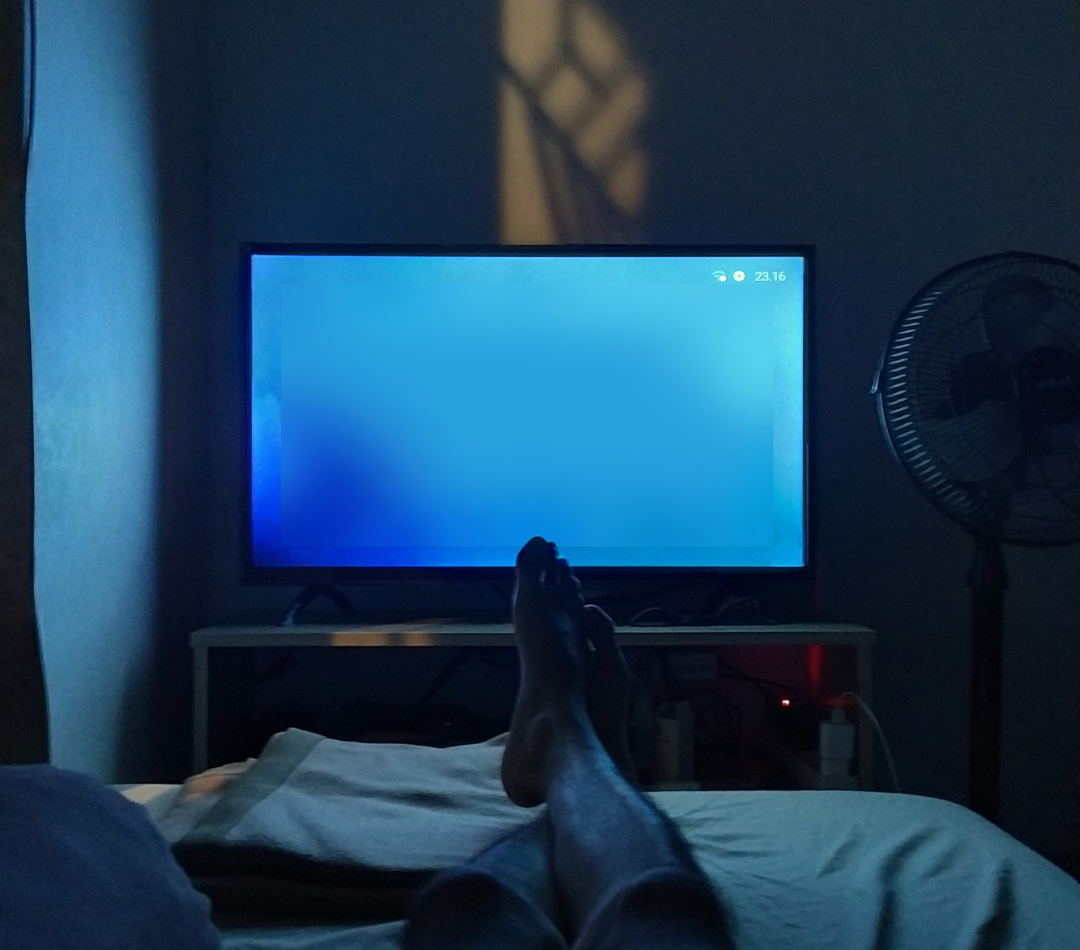
There is something wonderfully predictable about falling asleep to the same show for the 500th time.
You already know what happens. You know the characters, the voices, the rhythm of the dialogue. You might not even be properly listening anymore. The story has become familiar enough that it no longer asks anything of you.
And yet, this kind of thing is often described as a dependency.
But what if it isn’t dependency? What if it’s regulation?
Familiar sensory input can give the nervous system something predictable to settle around. When your internal world is busy, silence isn’t always calming or restful. Sometimes silence leaves more room for thoughts, sensations, worries, memories or the awareness of every little sound in the room.
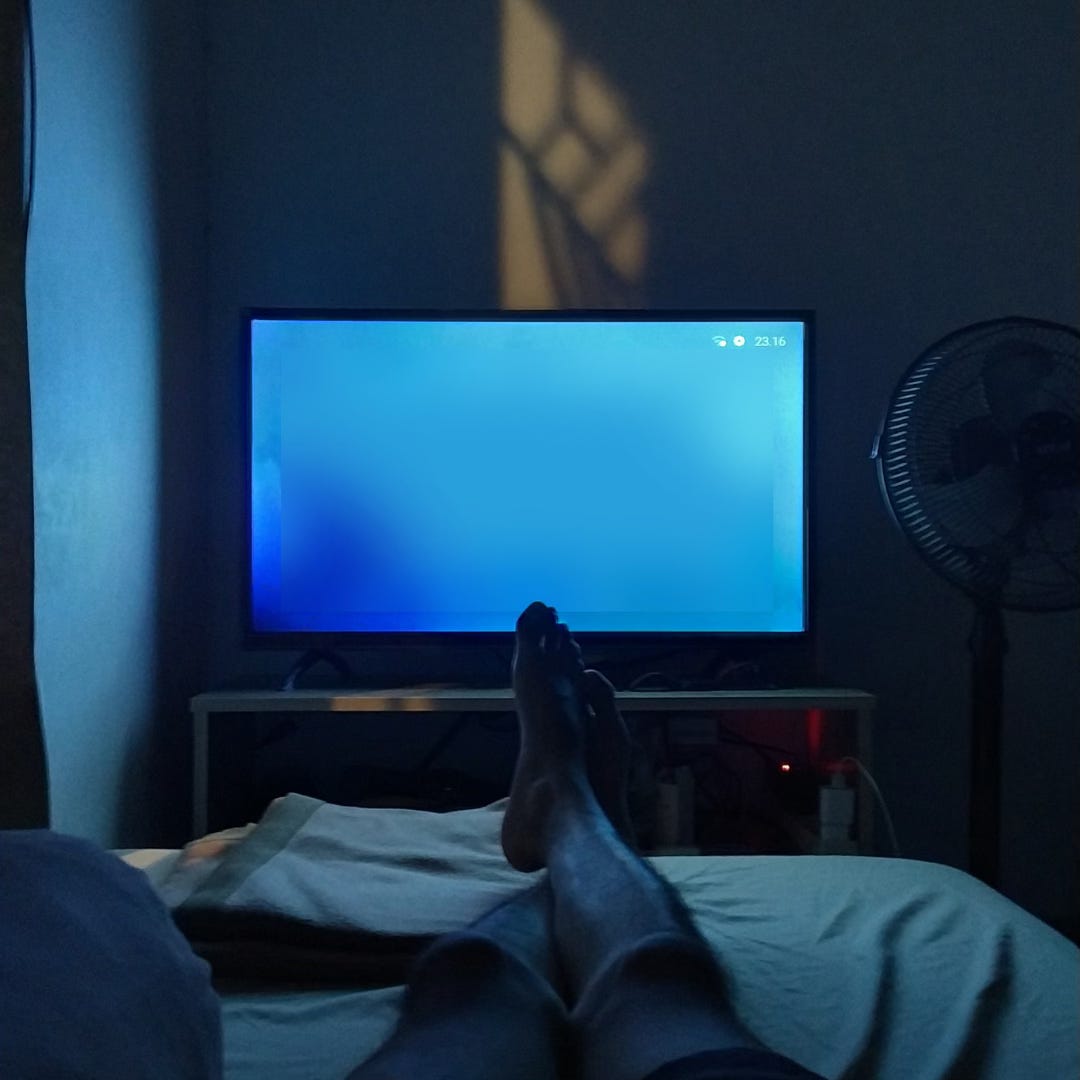
Image from Canva by Dwiky Alamsyah from Getty Images
You may also be interested in some of my other sleep blogs ‘All Things Waking Up in the Morning’, ‘Protecting Relationships When Sleep is Hard for PDAers’ and ‘Why Waking Up in the Morning Is Hard (It’s Hormones, Not Behaviour) and ’Webinar Recording and Write Up: What can we do about sleep difficulties when home doesn’t feel safe?
A familiar show doesn’t require much from you. You already know what happens, so there is nothing to work out, anticipate or pay attention to. The voices, rhythm and background noise simply become something known.
It can provide just enough input to quieten some of the internal noise without demanding attention.
For some neurodivergent people, that familiarity can help create the conditions where sleep can begin. Just as someone might find comfort in a particular blanket, sound, position or smell, a familiar show can become part of their way of settling.
Sleep itself is involuntary. We can’t command someone or ourselves to fall asleep, but we can sometimes understand and support the things that help their nervous system feel ready to let go.
So rather than asking, “How do we stop them needing this?”, perhaps we can ask, “What is this doing for them?” Because sometimes the goal isn’t to remove the thing that helps someone regulate.
Sometimes the thing that looks like a sleep dependency is actually the thing helping sleep happen.
Thank you for being here,
Laura Hellfeld
RN, MSN, PHN, CNL
Connect with me on social media
Instagram, Facebook, LinkedIn and BlueSky
Signposting and Resources
- Flush Forward!: A Friendly Toileting Guide for Parents Supporting Disabled and Neurodivergent Young People
- Belonging First: Building Connection and Trust in the Primary Classroom
- Creating Safe Spaces for Autistic People
- Gabby’s Glimmers: An Affirming Story of an Autistic Child and their Favourite Food
- All Things Waking Up in the Morning with download, Blog
- Protecting Relationships When Sleep is Hard for PDAers, Blog
- Why Waking Up in the Morning Is Hard (It’s Hormones, Not Behaviour)’, Blog
- Webinar Recording and Write Up: What can we do about sleep difficulties when home doesn’t feel safe?, Webinar
Last modified: 23 August 2026