

Constipation is one of the most common challenges families experience when supporting young people with toileting. It can affect people of all ages and it can have a big impact on comfort, appetite, sleep, mood, and even bladder health.
Because constipation doesn’t always look the way people expect, it can sometimes be missed. Understanding what constipation is and the signs to look out for, can help you get the right support early.
What is Constipation?
Constipation is when there is too much poo in the bowel (colon). As it sits there longer, more water is absorbed from it, which makes the poo harder, drier, and more difficult to pass.
Over time, poo can build up in the colon, creating a backlog. This can make it harder for the body to push poo out.
Constipation is not just about how often someone poos. It’s about how easily poo passes, what it looks like, and how the body is feeling.

You may also be interested in my related blogs ‘Rethinking Praise: Practical Strategies for Toileting Support‘, ‘Supporting PDAers with Hygiene: A Compassionate Approach‘, ‘Hypermobility and Ehlers Danlos and How They Affect Toileting’
Common Myths About Constipation
There are a few common myths that can make constipation harder to recognise.
Myth: The poo is always hard
Hard poo can be a sign of constipation, but it is not always present.
When a large amount of poo builds up in the colon, softer or more liquid poo can leak around it. This can look like diarrhoea or small frequent smears of poo in underwear. This is often called soiling or overflow.
Myth: A poo every day means someone isn’t constipated
Someone can poo every day and still be constipated.
If there is a backlog of poo in the bowel, softer poo may move around it and come out. This can give the impression that everything is working, even though constipation is still present.
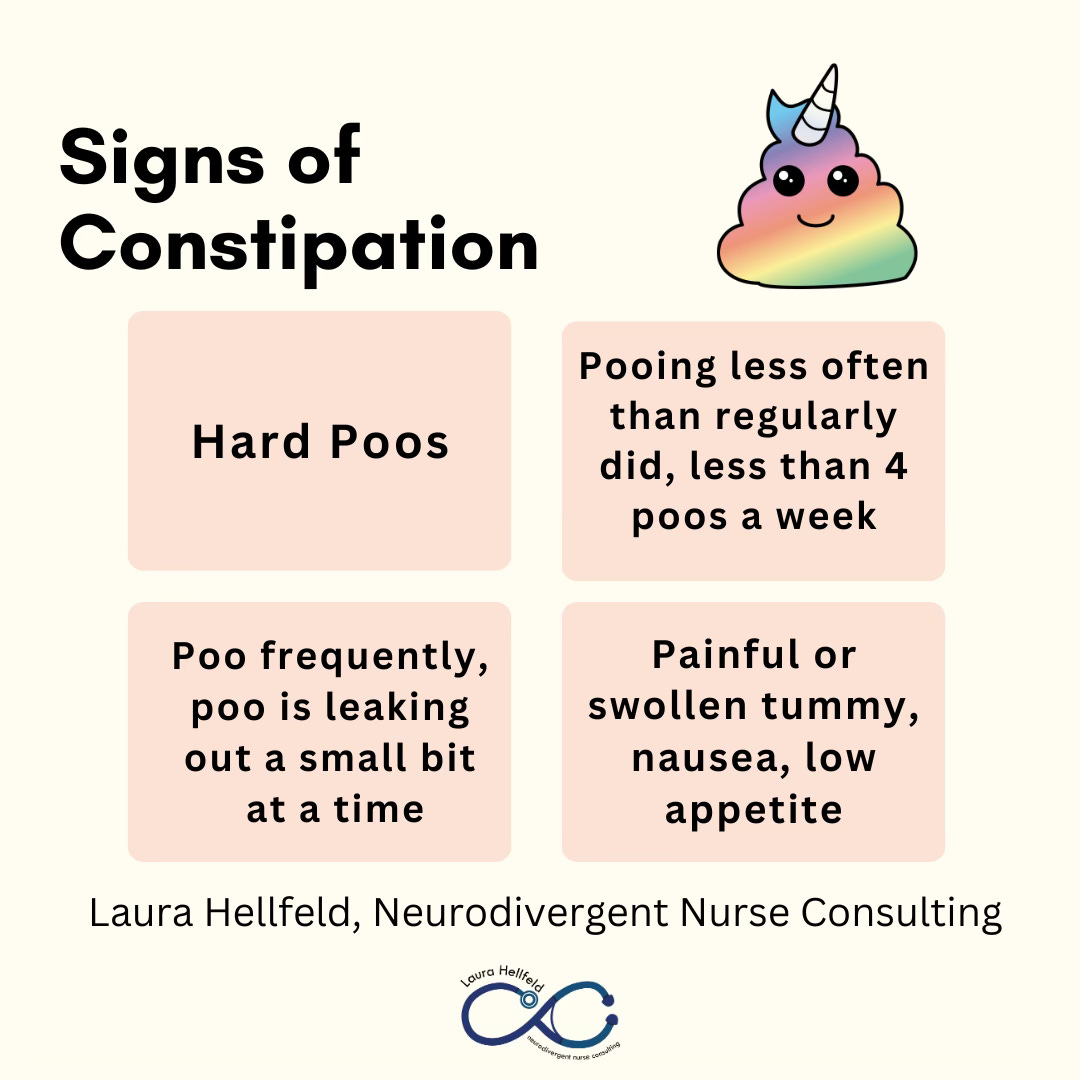
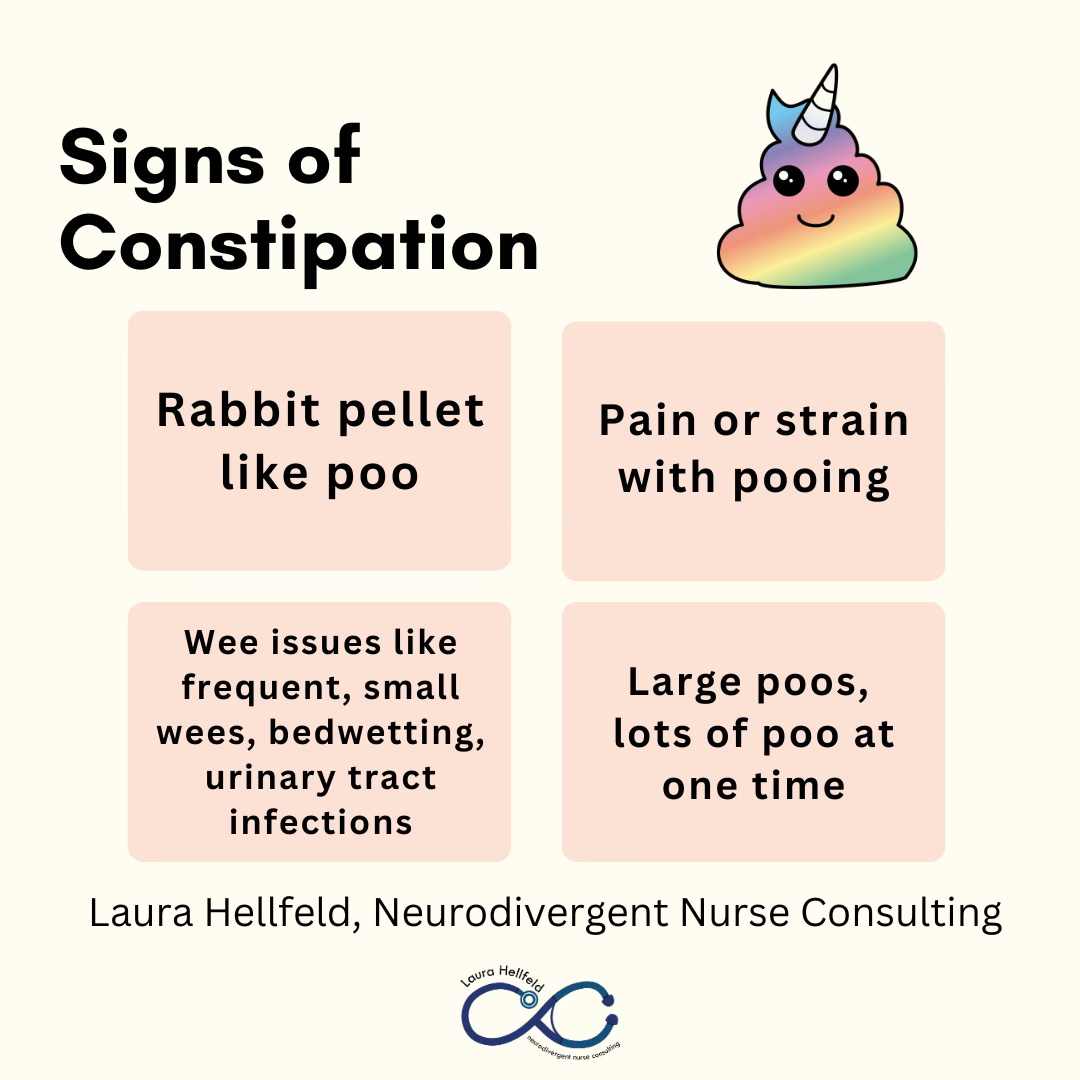
Signs of Constipation
Constipation can show up in many different ways. Some young people will have several signs, while others may only show one or two.
Signs may include:
The Bristol Stool Chart: A Helpful Tool
For parents and carers, it’s not always easy to know what to be looking for when it comes to concerns about poo.
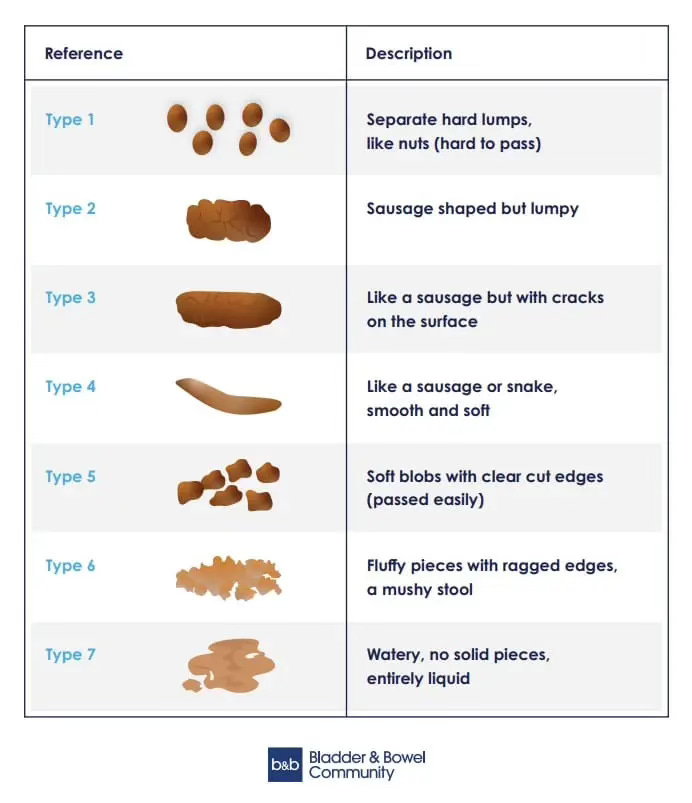
The Bristol Stool Chart shows different types of poo based on their shape and texture. It can be very helpful in identifying signs of constipation.
When your young person uses the toilet or nappy, it can help to briefly check the poo and compare it to the chart.
The most comfortable poo types
The types of poo are:
- Type 3 – sausage shaped with small cracks
- Type 4 – smooth, soft, sausage-shaped
These are usually soft, formed, and easy to pass.
When to seek support
It’s recommended to speak with your General Practitioner or another healthcare professional if your child:
- Regularly has Type 1 or Type 2 poo (hard, pellet-like stools)
- Regularly has Type 6 or Type 7 poo (loose or watery stools), which can sometimes be overflow from constipation
- Experiences any signs or symptoms of constipation
Bristol Stool Chart is below
Gloucestershire Health and Care, NHS
Who to Talk to for Support
If you suspect your young person may be constipated, you can talk to:
- Your General Practitioner
- A paediatrician
- A continence nurse
- Your young person’s health visitor or school nurse
These professionals can help assess what is happening and support your young person with treatment and ongoing management if needed.
Important Disclaimer
This article is intended for general educational purposes and should not replace medical advice. If you are concerned about your young person’s bowel habits, pain, appetite, or toileting patterns, please speak with a qualified healthcare professional.
Thank you for learning about the community,

Laura Hellfeld
RN, MSN, PHN, CNL
Connect with me on social media
BlueSky, LinkedIn, Instagram and Facebook
Disclaimer: The information shared in this blog is for informational purposes only and is not intended to replace medical advice, diagnosis, or treatment. Please consult a licensed healthcare provider for personalised support and care tailored to your specific needs.
Signposting and Resources:
- Rethinking Praise: Practical Strategies for Toileting Support, Blog
- Hypermobility and Ehlers Danlos and How They Affect Toileting, Blog
- Supporting PDAers with Hygiene: A Compassionate Approach’, Blog
- Creating Safe Spaces for Autistic People
- How do I get my young person not to hold their bladder?, Blog
- Gabby’s Glimmers: An Affirming Story of an Autistic Child and their Favourite Food
Last modified: 10 March 2026