
Parents and carers often tell me, “They eat so much at home, but barely touch anything at school.”
Others describe: a young person who comes home from school and suddenly seems ravenous, eating large amounts after appearing uninterested in food all day.
The reason behind the eating patterns sometimes lies in the environment.
School can dramatically reduce a young person’s capacity to eat.
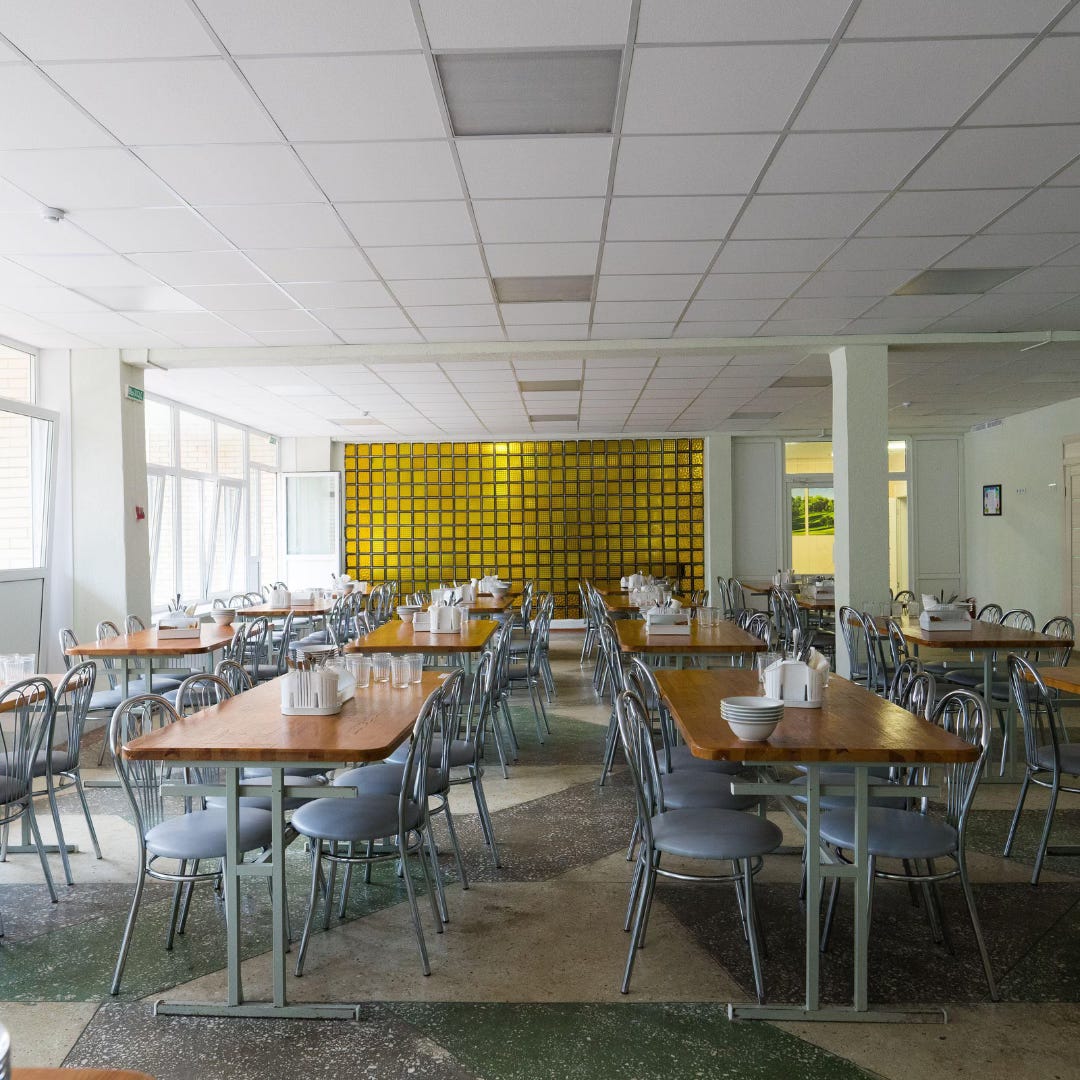
Image from Canva by Ivan Zelenin from Alamy
You might also be interested in my other food blogs such as ‘Why “Just Try It” Might Not Work at the Dinner Table’, ‘Context Eating: Why We Prefer Specific Foods in Specific Situations‘, ‘Why We Need Low Pressure Food Opportunities‘ and ‘How to Get Them to Eat: Rethinking Some Traditional Parenting Strategies‘
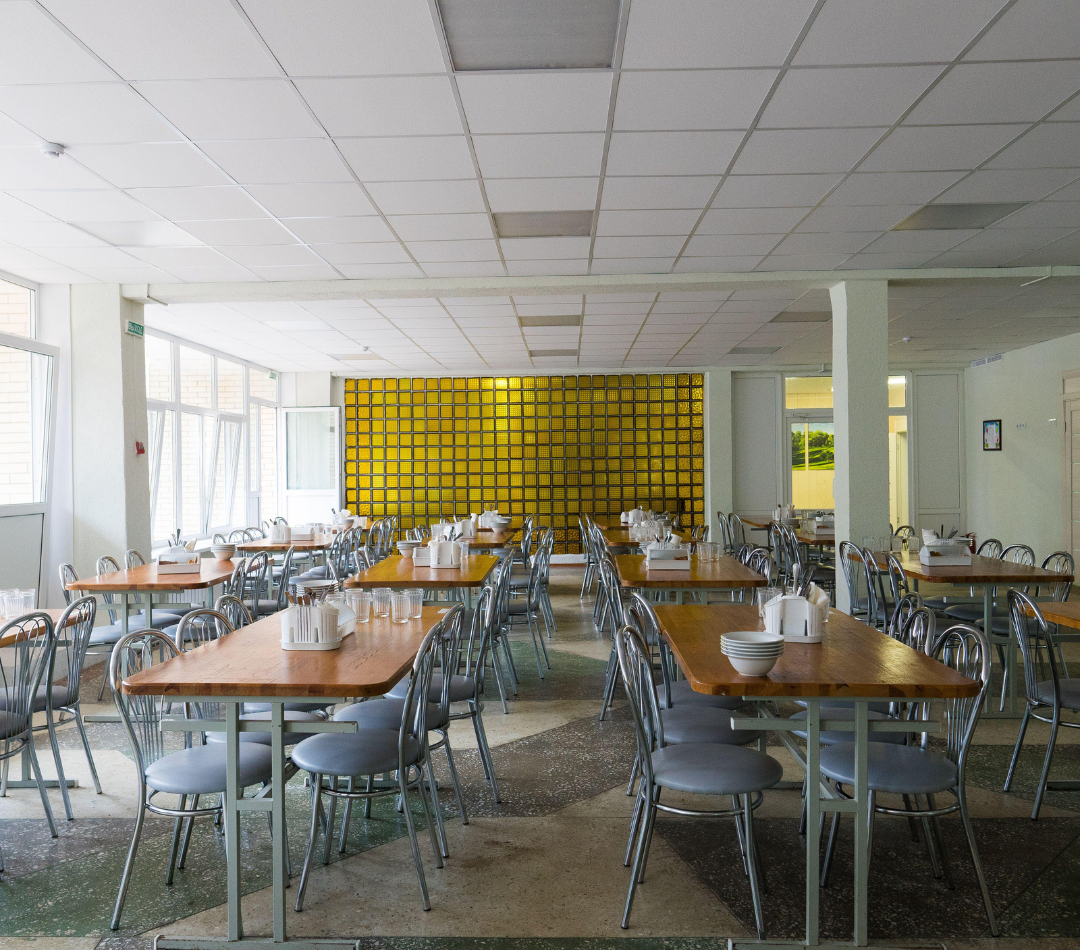
For many children and young people, the dining hall is one of the most demanding environments of the entire school day. It may involve loud noise, strong smells, bright lighting, crowded spaces, unpredictable movement, and constant social observation. On top of this, there is often limited time to eat and little control over where, when, or with whom they sit.
Eating is not simply a physical act. It requires a level of regulation, safety, and capacity.
When a young person is already using significant energy to navigate learning demands, sensory input, social expectations, transitions, and masking throughout the school day, there may be very little left available for eating. Some young people spend so much energy getting through the day that food becomes one more demand their body cannot manage in that moment.
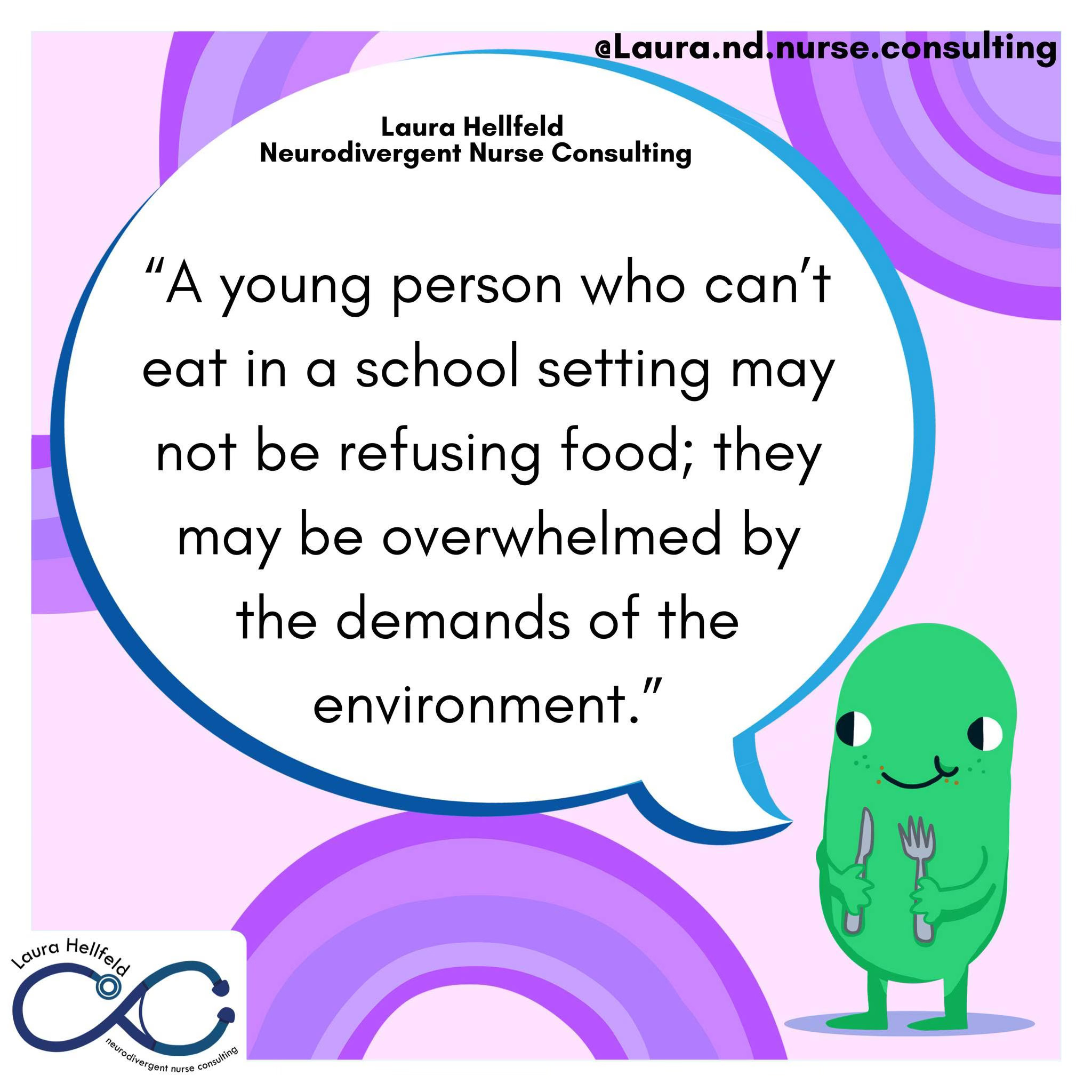
This is why a young person who cannot eat at school is not necessarily refusing food.
They may be navigating an environment that feels overwhelming, unsafe, distracting, or simply too demanding for eating to be possible.
Understanding this can shift the conversation from “How do we make them eat?” to “What barriers are making eating difficult here?”
When families and schools work together to identify those barriers, meaningful solutions often emerge. This might involve adjustments to the eating environment, greater flexibility around food, alternative eating spaces, or additional time.
The goal is to create conditions where eating feels possible.
Thank you for being here,

Laura Hellfeld
RN, MSN, PHN, CNL
Connect with me on social media
Instagram, Facebook LinkedIn and BlueSky
Disclaimer: The information shared in this blog is for informational purposes only and is not intended to replace medical advice, diagnosis, or treatment. Please consult a licensed healthcare provider for personalised support and care tailored to your specific needs.
Signposting and Resources
- Flush Forward!: A Friendly Toileting Guide for Parents Supporting Disabled and Neurodivergent Young People
- Creating Safe Spaces for Autistic People
- Gabby’s Glimmers: An Affirming Story of an Autistic Child and their Favourite Food
- Why “Just Try It” Might Not Work at the Dinner Table, Blog
- Context Eating: Why We Prefer Specific Foods in Specific Situations, Blog
- More on Context Eating: Understanding Food Preferences Without Pushing for Change, Blog
- Why We Need Low Pressure Food Opportunities, Blog
- How to Get Them to Eat: Rethinking Some Traditional Parenting Strategies, Blog
Last modified: 9 June 2026