
The NeuroHub Mental Health Conference is rooted in our core belief that neurodivergent voices should lead the conversation about neurodivergent lives.
Event Date:
Aug 14 at 12:00 AM
Click here for ticket purchasing
From NeuroHub’s Webpage
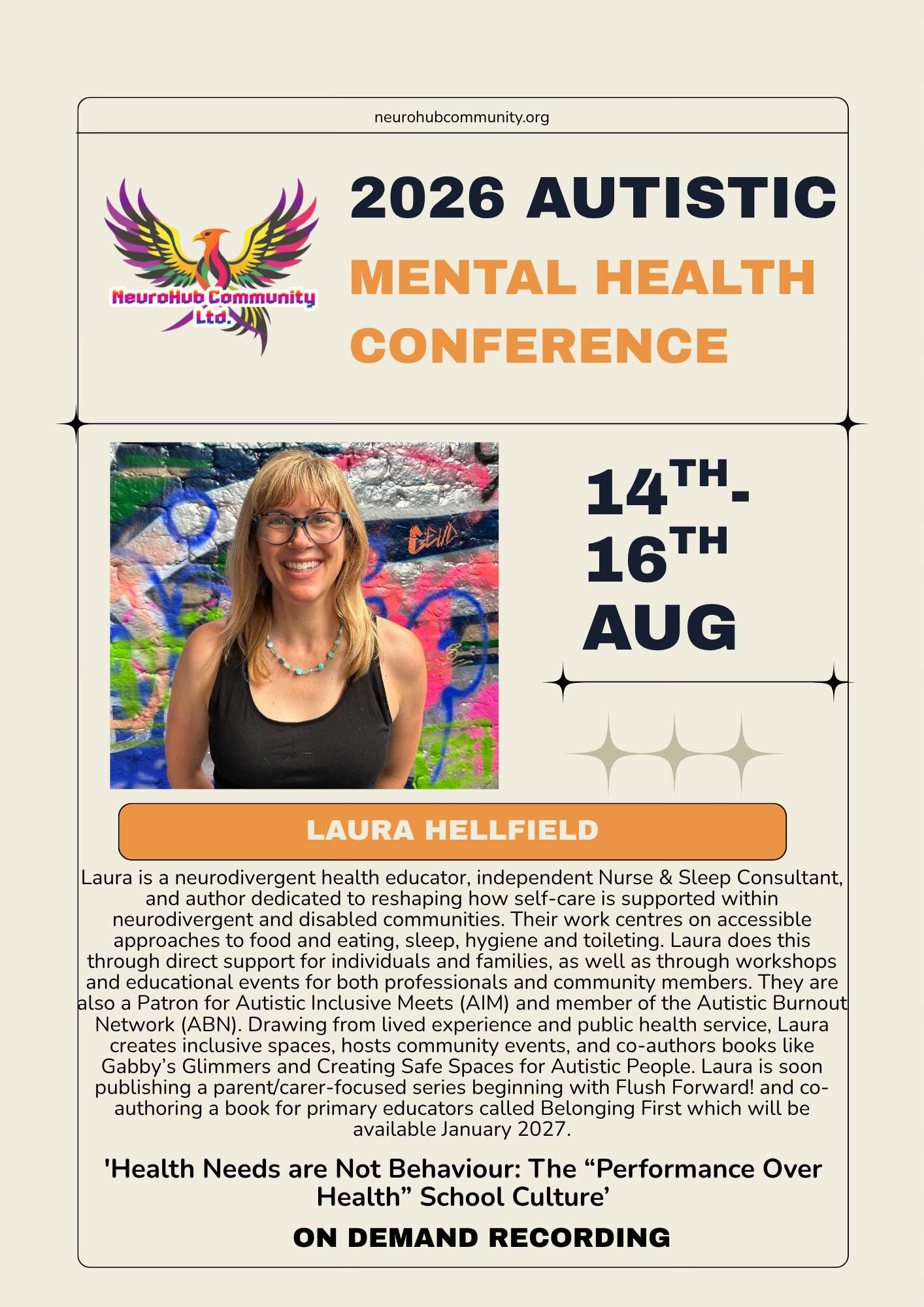
The NeuroHub Mental Health Conference is rooted in our core belief that neurodivergent voices should lead the conversation about neurodivergent lives. Shaped by our ethos, the conference centres lived experience, alongside research and education created by neurodivergent individuals themselves—not framed solely through external observation. We move beyond deficit-based, pathology-driven narratives and instead champion the neurodivergent paradigm: one that recognises difference, celebrates creativity, and honours the depth, insight, and potential of those who experience the world in uniquely powerful ways.
My Conference Webinar
Webinar Info: Pre-recorded
Webinar Description:
In many schools, young people are expected to meet rigid expectations around attendance, eating, drinking, toileting, and classroom participation. This is often regardless of whether their bodies are able to keep up.
For many neurodivergent children and young people, everyday health needs such as hydration, food, digestion, and bathroom use are deeply connected to their sensory experiences, interoception, and underlying health conditions. When these needs are misunderstood or unsupported, they are often treated as behaviour problems rather than healthcare needs.
Young people may be denied bathroom access, discouraged from drinking water, rushed through meals, or expected to attend school while unwell. When they struggle, the response can include missed playtimes, public correction, attendance pressure, or shame in front of peers.
Over time, these experiences can have a significant impact on mental health, school engagement, and a young person’s relationship with their own body.
In this webinar, we will begin to explore how school systems sometimes prioritise compliance and performance over health and wellbeing.
Together we will look at:
- How everyday health needs are often misinterpreted as behaviour
- The role of sensory differences and interoception in eating, drinking, and toileting
- Why many children are expected to continue performing in school while physically unwell
- The gap between healthcare and education systems
- How shame, punishment, and public correction can impact mental health
- Practical ways schools, families, and professionals can create safer and more responsive environments
- Participants will also receive practical handouts to support the learning

Last modified: 29 May 2026